Diesel Particulate Filters (DPF) are among the most significant innovations in exhaust systems in recent years. DPFs are designed to treat exhaust gases by removing soot, carbon buildup, and the characteristic smell of diesel fuel. Located downstream of the DPF is the VGT (Variable Geometry Turbocharger), which utilizes high-velocity airflow to drive the turbine. As with any component of an emission control system, regular maintenance is key to keeping the DPF functional. To ensure your VGT turbocharger and diesel engine are performing at their best, we will outline exactly what you should look out for.
When diesel particulate filters (DPF) first appeared, a number of problems arose. Like any new technology, they weren’t always perfect from the start, and we saw a huge number of cases where DPFs cracked, failed or broke down completely. This created a major problem because by that time either the warranty on them had already expired and manufacturers refused to honor it, or — if they were improperly used or maintained — the warranty didn’t apply anyway. In essence, they were expensive and not particularly durable or reliable. When they failed, operators basically had two options: fit a new DPF or just fit a straight pipe and remove it. As a result, people started deleting them — and that was probably the beginning of our whole DPF experience. They simply weren’t built as well back then as they are today.
Just like with most other diesel engine faults, there are several key symptoms that can indicate whether your diesel particulate filter (DPF) is faulty. Here are four signs to watch for if your DPF needs servicing.
In most cases, a DPF problem is actually a consequence of an undiagnosed fault in another engine component. Faults in upstream components can lead to excessive soot and carbon buildup. Common culprits include worn or malfunctioning injectors or timing issues, which cause the DPF to become clogged.
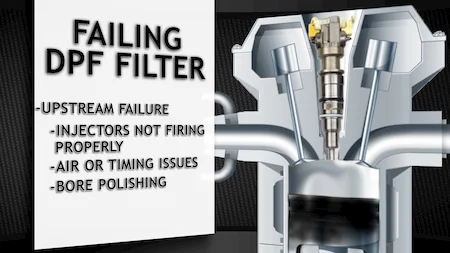
If the injectors are worn and the fuel isn't being sprayed at the correct pressure, the atomization is poor and the air-fuel ratio becomes incorrect. As a result, combustion isn't as clean as it should be, leading to more solid particles forming that clog the filter. Once this starts, it creates a cascading effect — the clogging happens faster and faster because the underlying problem keeps getting worse.
Cylinder glazing can also cause DPF failure. If the engine runs without a DPF (or if one is removed), carbon buildup accumulates on the cylinder walls and piston sides, leading to incorrect temperatures and improper combustion.
When the DPF warning light comes on, drivers often face forced regeneration, which forces them to pull over. Ignoring the issue leads to complete filter failure. As we mentioned earlier, this caused manufacturers to void warranties due to insufficient or complete lack of DPF maintenance. At that point, you'll have to pay the bill for a new DPF replacement.
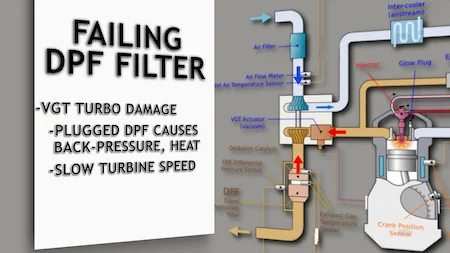
Similarly, VGT turbochargers can be damaged due to a faulty DPF. The turbine wheel on the exhaust side of the VGT is located downstream of the DPF and is driven by forced exhaust gases. If the DPF becomes clogged and restricts or blocks exhaust flow, the turbine wheel can't spin properly. The compressor wheel on the intake side also suffers from the low turbine speed, failing to provide enough cold air for combustion. As a result, your VGT won't perform at optimal levels.
Copyright ©